

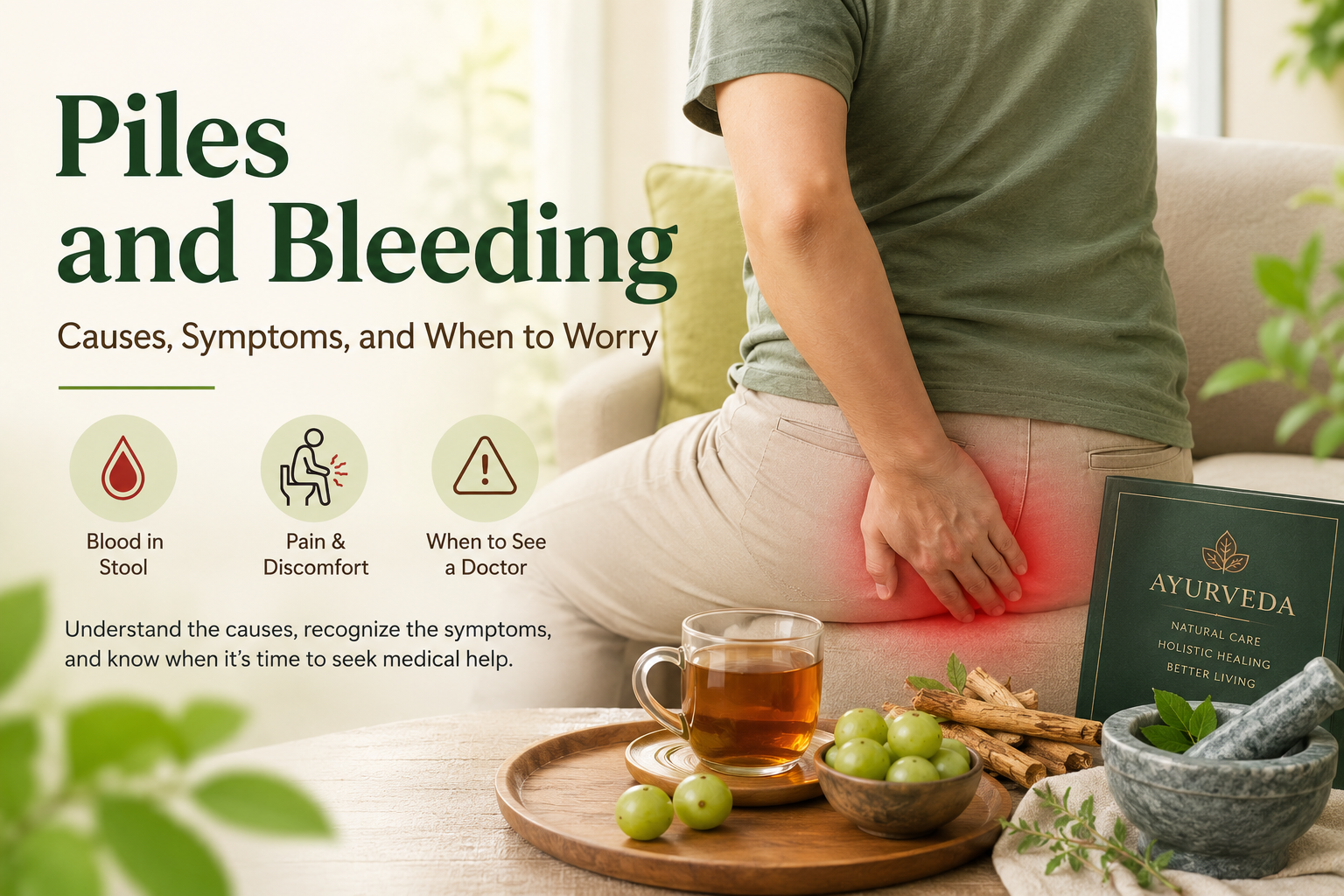
Piles and Bleeding: What’s Normal, What’s Not, and When to Stop Guessing
Spotting blood after you use the bathroom is unsettling, even when you’re pretty sure you know why. Maybe it’s on the toilet paper, maybe it’s mixed in with the stool, maybe you notice it in the bowl. Whatever the case, that first reaction of “wait, is that blood?” deserves a real answer, not just a quick assumption.
Piles (hemorrhoids) are a common cause of this kind of bleeding. But here’s the thing worth sitting with for a second: common doesn’t mean automatic. Just because hemorrhoids can cause bleeding doesn’t mean every drop of blood you see is coming from them.
If the bleeding is new, if it keeps happening, or if it shows up alongside other symptoms, it’s worth figuring out what’s actually going on rather than reaching for another home remedy. Everyday habits matter too. Constipation, hard stools, straining, and lingering too long on the toilet can all make hemorrhoids harder to manage.
So, Can Piles Actually Cause Bleeding?
Yes, they can. Hemorrhoids are swollen veins in and around the anus or lower rectum, and internal ones in particular can bleed during or right after a bowel movement. It’s often bright red, and it can show up even when there’s no pain at all. That can make it even more unnerving for a lot of people. External hemorrhoids, on the other hand, tend to announce themselves more through itching, tenderness, and swelling around the opening.
But this is the part that’s easy to skip past. Seeing blood doesn’t confirm hemorrhoids are the cause. Rectal bleeding has other explanations too. If you’ve never actually been diagnosed with hemorrhoids, or if the bleeding won’t quit or seems out of the ordinary for you, that’s a conversation worth having with a doctor rather than a search engine.
For more information about hemorrhoids and their symptoms, you can also read our
medical guide to hemorrhoid symptoms and causes.
What Does Hemorrhoid Bleeding Usually Look Like?
When internal hemorrhoids bleed, it’s typically bright red, and you might notice it:
- On the toilet paper after wiping
- Sitting on top of the stool
- In the toilet bowl
- During or just after you go
How much blood shows up can vary a lot from person to person. But don’t let color alone be your diagnostic tool. Plenty of other issues can produce blood that looks more or less identical.
Why Do Piles and Bleeding Tend to Show Up Together?
Picture a rough bowel movement. The stool’s hard, so you push. Nothing happens, so you push harder. Then you sit there a while longer, hoping.
Do that often enough and you’re putting repeated pressure on an area that may already have hemorrhoids sitting there, just waiting to be irritated. A few habits tend to feed into this cycle.
Constipation and hard stools. When stool is difficult to pass, it’s easy to focus on managing the discomfort after the fact instead of asking why things are so hard to begin with. If most bathroom trips take real effort, that’s the part worth fixing.
Straining, again and again. Pushing harder isn’t actually the solution. It just increases the pressure around the anus and rectum. If hemorrhoids are already there, that extra pressure can make things worse, not better.
Too much time on the toilet. The bowel movement itself might take two minutes. The bathroom visit, especially with a phone in hand, can stretch to twenty. Once you’re done, get up. Don’t linger to scroll.
Not enough fiber. You can eat plenty of food and still barely get any fiber if vegetables, fruits, legumes, and whole grains rarely make it onto your plate. Rebalancing your diet can make a meaningful difference to bowel regularity.
For more practical dietary guidance, read our
Hemorrhoid Diet: What to Eat & Avoid for Better Bowel Health.
Is All Rectal Bleeding From Piles? No.
Hemorrhoids are a common culprit, but they’re far from the only one. Repeatedly blaming “piles” and self-treating without actually knowing the cause isn’t a sustainable strategy. A doctor can look at your symptoms and decide whether more investigation is needed. That’s not overkill, it’s simply the right way to approach unexplained bleeding.
The
National Institute of Diabetes and Digestive and Kidney Diseases explains that rectal and gastrointestinal bleeding can have several possible causes, so persistent or unexplained bleeding should not automatically be blamed on hemorrhoids.
What Can You Actually Do at Home?
Basic home care can genuinely help with mild hemorrhoid symptoms, especially when constipation and straining are part of the picture. But it has limits, and those limits shouldn’t become an excuse to put off getting checked when bleeding won’t go away.
Make stool easier to pass. Look at what’s already on your plate. Good fiber sources include dal and lentils, chickpeas and beans, vegetables, whole fruits, oats, and other whole grains. You don’t need to overhaul your diet overnight. If your fiber intake is low, build it up gradually into habits you can actually stick with, not a five-day “piles diet” you’ll abandon.
Don’t ignore fluids. Fiber works best when you’re also drinking enough water. How much you need varies with climate, activity, diet, and overall health, so use your own judgment or your doctor’s advice if you’ve been told to limit fluids for another reason.
Stop forcing it. If you’re regularly sitting there straining because things won’t move, that’s a signal, not a routine. It could be diet, hydration, your bowel schedule, or something else driving the constipation. It’s worth discussing rather than pushing through every morning.
Keep bathroom visits short. Go when your body tells you to, finish, and leave. Sitting around afterward doesn’t help anything and can encourage more straining and pressure.
Managing Expectations on Home Care
Search “hemorrhoid home care” and you’ll get an avalanche of tips, not all equally useful. The solid ones are simple: eat more fiber where it makes sense, stay hydrated, skip unnecessary straining, and don’t overstay your welcome on the toilet. A warm sitz bath can also ease mild discomfort for some people.
What none of this can do is tell you why you’re bleeding. If it keeps happening, the answer isn’t another new remedy. It’s an actual diagnosis.
What’s the Right Treatment for Bleeding Hemorrhoids?
There’s no one-size-fits-all treatment. It depends on what’s causing the bleeding, what type of hemorrhoids are involved, and how severe things are. For milder cases, a doctor might start with diet and habit changes. If things don’t improve, there are office-based procedures and other medical options to consider.
Whatever you do, steer clear of DIY hemorrhoid procedures. That’s not a place to experiment based on something you read online.
Where Does Ayurvedic Support Fit In?
Some people like to build Ayurvedic products into their general digestive or bowel-health routine. Sehat Ayurveda Herbal PC Piles Capsules, for instance, combine botanical ingredients such as Haritaki and Neem.
If you’re considering an Ayurvedic product, keep its role in perspective. It is not a substitute for medical evaluation of rectal bleeding, and it doesn’t make fiber, hydration, and better bowel habits any less necessary.
You can learn more about the
Ayurvedic approach to hemorrhoid care
and how dietary and lifestyle habits can fit into a broader routine.
If you’re on regular medication, managing a health condition, pregnant, or breastfeeding, check with a qualified professional before adding anything new.
Can an Ayurvedic Product Stop the Bleeding on Its Own?
It wouldn’t be honest to promise that. Figuring out the actual cause comes first. Treating a symptom without knowing what’s behind it can delay the care you might actually need.
Ayurvedic options can have a place in someone’s broader wellness routine where appropriate, but they are not a substitute for medical attention when bleeding is recurring or significant.
If you’re researching herbal options, you can learn more about
Sehat Ayurveda PC Capsules.
When Should You Actually See a Doctor?
Don’t let yourself get used to bleeding just because it’s happened before. Get it checked if it’s new, unexplained, or keeps coming back, and also if:
- Home care hasn’t made a difference
- The pain is getting worse
- Your bowel habits have shifted noticeably
- You’re just not sure hemorrhoids are really the cause
Getting checked isn’t about assuming the worst-case scenario. It’s about trading guesswork for an actual answer.
When Is It an Emergency?
Some situations aren’t a home-remedy situation at all. Get urgent care if the bleeding is heavy or won’t stop, or if you feel seriously unwell, especially alongside:
- Dizziness or feeling like you might faint
- Significant weakness
- Severe pain in the anal area
- Significant abdominal pain or cramping
- Fever
- Diarrhea with significant pain or bleeding
Black or tarry stools also deserve urgent attention, since that can point to bleeding higher up in the digestive tract. If you feel faint or seriously unwell, don’t try to wait it out. Get help.
The
NIDDK guide to gastrointestinal bleeding
also advises prompt medical attention for signs of acute or severe bleeding.
Four Habits That Actually Move the Needle
- Get fiber onto your plate, daily. Add vegetables at lunch, keep dal or another pulse in rotation, reach for whole fruit, and work in whole grains where they fit.
- Don’t fight your body’s timing. When you feel the urge, go. Don’t keep putting it off.
- Leave your phone outside the bathroom. Without it, there’s a lot less reason to sit there once you’re done.
- Take ongoing constipation seriously. If it’s not improving despite reasonable changes, get advice rather than living with it.
What Not to Do When You See Blood
Don’t assume it’s automatically piles. Don’t keep self-treating bleeding you haven’t had looked at. Don’t lean on a supplement to mask a symptom you haven’t actually investigated. And don’t keep straining just because a bowel movement is proving stubborn.
Notice what happened, make sensible adjustments, and get medical advice when the situation calls for it.
Keeping It Simple
You don’t need fifteen remedies or a complicated routine. It really comes down to four things: fiber, fluids, better bowel habits, and medical care when it’s needed.
If constipation is the problem, fix your eating pattern. If you’re spending too long in the bathroom, cut it short. If you’re straining regularly, dig into why passing stool is so difficult in the first place. And if the bleeding keeps showing up, get it looked at instead of guessing again.
The Bottom Line
Piles and bleeding often go together. Internal hemorrhoids can cause bright-red blood during or after a bowel movement, but that doesn’t mean every instance of rectal bleeding traces back to hemorrhoids.
Day to day, the basics matter most: enough fiber, enough fluids, less straining, and shorter toilet visits. Ayurvedic products might have a supportive role for some people, but they’re not a substitute for diagnosis or necessary treatment.
Above all, pay attention to the pattern. A symptom that keeps coming back deserves more than another quick fix from the internet. If the bleeding is persistent, recurring, or you can’t explain it, talk to a healthcare professional. And if it becomes heavy, or you start feeling faint or seriously unwell, treat it as urgent.
Frequently Asked Questions
Can piles cause bright-red bleeding?
Yes, internal hemorrhoids can produce bright-red blood on stool, toilet paper, or in the bowl after a bowel movement. Other conditions can cause similar bleeding, though.
What should I do if my piles are bleeding?
Ease up on straining and pay attention to fiber, hydration, and bowel habits. Get it checked by a doctor, especially if the bleeding is new, unexplained, or recurring.
Is bowel bleeding always from hemorrhoids?
No. Hemorrhoids are one possible cause among several, so don’t diagnose the cause based on appearance alone.
Can constipation make bleeding worse?
Yes. Hard stools and straining can increase pressure in the area and may aggravate existing hemorrhoids.
What’s the actual treatment for bleeding hemorrhoids?
It depends on the diagnosis and severity. Mild cases may start with diet and habit changes, while more persistent cases might need medical procedures recommended by a healthcare professional.
Can Herbal PC Piles Capsules replace medical treatment?
No. They are not a substitute for diagnosing or medically treating rectal bleeding.
When does rectal bleeding need urgent care?
When it’s heavy or won’t stop, or when it comes with severe pain, dizziness, fainting, significant weakness, or other serious symptoms.