

Few health topics get less open conversation than bowel movements, yet almost everyone has wondered at some point whether theirs are actually normal. The honest answer involves less guesswork than most people expect — regularity comes down to a handful of measurable habits, not luck or genetics alone.
This guide covers what “regular” really means, the diet and hydration basics that drive it, and the daily habits worth building if things feel consistently off. Along the way, we’ll also flag where irregular bowel movements start creating downstream problems, since that connection matters more than most diet articles let on.
This article is for general education and doesn’t replace a medical evaluation. Persistent changes in bowel habits are always worth discussing with a doctor.
What Counts as Regular Bowel Movements Anyway?
Most people assume once a day is the standard, but clinical evidence says otherwise. According to the Rome IV criteria — the diagnostic framework gastroenterologists use — a normal range spans anywhere from three bowel movements a day to three a week. Both ends of that range count as healthy, provided the pattern stays consistent and comfortable for you specifically.
Frequency, though, isn’t the only marker. Stool consistency matters just as much: soft, well-formed, and easy to pass beats a daily habit that still requires straining. If you want a quick mental reference, the Bristol Stool Chart’s “type 3–4” range (smooth, sausage-shaped) generally reflects the healthiest transit time. Consequently, someone going once every two days with zero straining is doing better than someone going daily but straining every time.
The Diet Foundation for Healthy Bowel Movements
Fiber does most of the heavy lifting here, and getting the type right matters as much as the quantity.
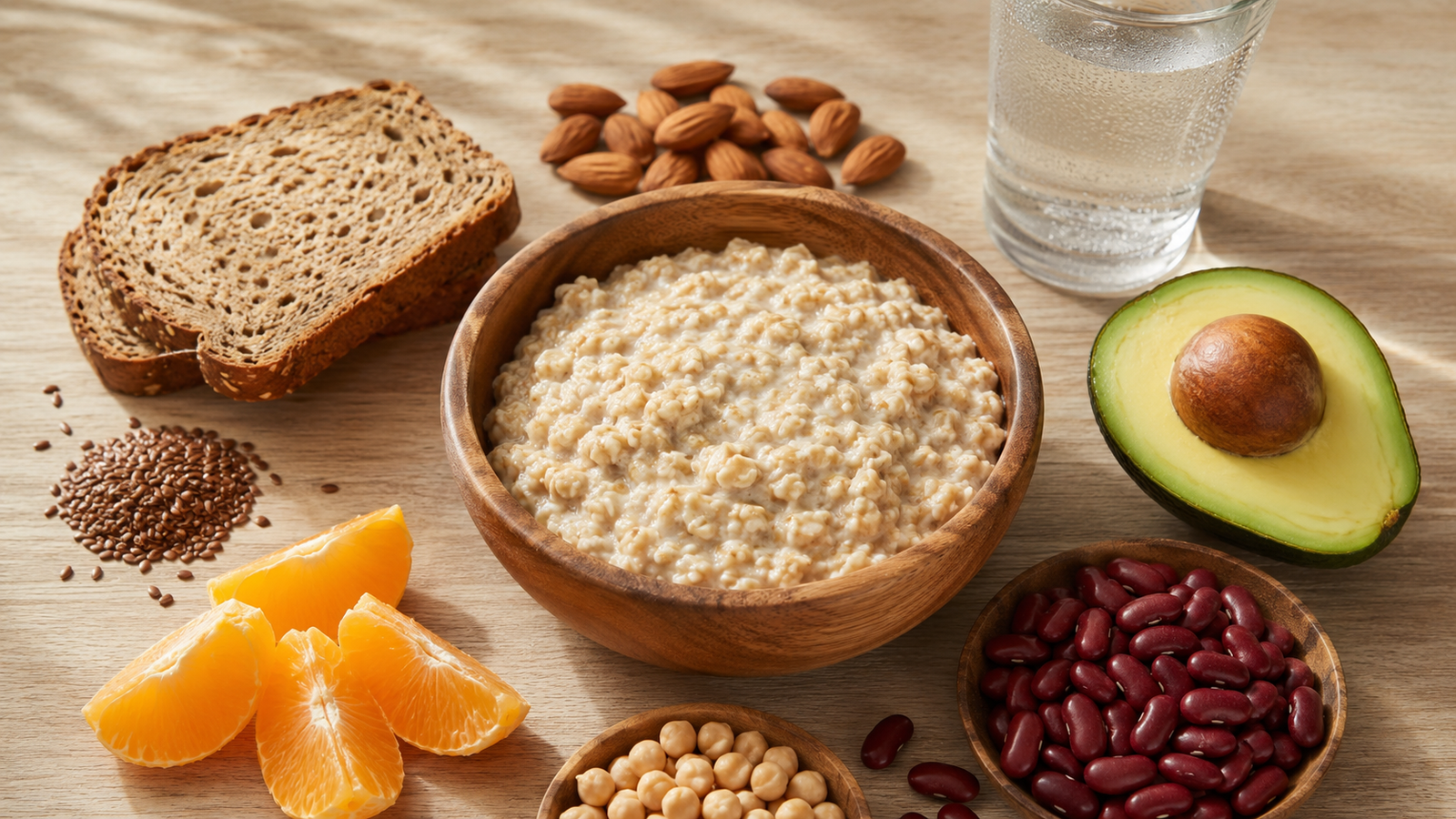
Soluble fiber dissolves in water and forms a gel-like substance that softens stool and slows digestion just enough to ease absorption. Oats, beans, citrus fruits, and avocado are reliable sources.
Insoluble fiber, by contrast, doesn’t dissolve — it adds bulk and speeds up transit time instead. Whole grains, nuts, and vegetable skins cover this side.
| Fiber Type | What It Does | Good Sources |
|---|---|---|
| Soluble | Forms a gel and helps soften stool | Oats, beans, citrus fruits, avocado |
| Insoluble | Adds bulk and supports faster transit | Whole grains, nuts, wheat bran, vegetable skins |
Most nutrition guidelines recommend roughly 25–30 grams of fiber daily for women and 30–38 grams for men, and the gap between that target and what most people actually eat is larger than it should be. Johns Hopkins Medicine’s guide to foods for constipation breaks down specific food choices in more depth if you want to build a fiber plan from here.
For anyone already managing piles-related discomfort specifically, our hemorrhoid diet guide goes further into which foods to prioritize and which to limit.
Hydration: The Habit Fiber Depends On
Here’s the part diet articles routinely skip: fiber and water work as a pair, not independently. Soluble fiber absorbs water in the digestive tract to form that softening gel — without enough fluid intake, the same fiber can actually make stool harder and more difficult to pass, not easier. That’s why loading up on fiber alone rarely fixes irregularity on its own.
A reasonable daily target sits around 8 glasses of water, adjusted upward for hot climates, physical activity, or a high-fiber diet transition. Caffeine and alcohol work against this goal since both have a mild dehydrating effect, so it’s worth balancing them with extra water rather than cutting entirely.
Daily Habits That Support Digestive Health
Diet gets most of the attention, but timing and behavior influence bowel regularity just as much.
Use the Gastrocolic Reflex
Eating triggers colon activity, especially after breakfast — this is precisely why many people feel the urge shortly after their first meal. Building a consistent morning routine around that window rather than fighting it tends to work with your body instead of against it.
Move Regularly
Physical activity keeps stool moving through the colon by stimulating intestinal muscle contractions; a sedentary day, on the other hand, tends to slow that process down noticeably.
Fix Your Toilet Posture
A raised-foot position — using a small stool under your feet to bring your knees above hip level — straightens the anorectal angle and can reduce the straining a standard seated position often requires. This single habit change is one of the more underrated fixes for chronic straining.
Don’t Delay the Urge
Postponing a bowel movement repeatedly trains the body to ignore or suppress the signal over time, which can gradually worsen regularity rather than just causing occasional inconvenience.
Manage Stress Where You Can
The gut and nervous system are closely linked, and chronic stress can affect gut motility in both directions — some people slow down, while others speed up.
How Irregular Bowel Movements Lead to Piles
This is the connection most general digestion content leaves out entirely, and it’s worth understanding even if you have no current symptoms.
Chronic straining — the kind that comes from irregular, hard-to-pass bowel movements — repeatedly raises pressure in the rectal veins. Over time, that pressure can contribute to piles forming and worsening. In other words, the diet and habits covered above aren’t just about comfort; they can also form a useful preventive layer against piles.
If you’re already noticing symptoms, our guides on piles and bleeding and Ayurveda vs surgery for piles go into what to watch for and how treatment decisions actually get made.
Alongside dietary changes, some people also look to herbal support. Our breakdown of herbal piles capsules covers what’s typically included in those formulations and how they’re meant to be used.
When to See a Doctor
Diet and habit changes handle most day-to-day irregularity, but certain signs shouldn’t wait for a home-remedy trial:
- Blood in the stool, whether bright red or dark and tarry
- Unintentional weight loss alongside a change in bowel habits
- Alternating diarrhea and constipation that persists for more than a few weeks
- Severe abdominal pain or bloating that doesn’t resolve
- A family history of colorectal issues, especially alongside any of the above
Going more than three days without a bowel movement on a regular basis, or straining significantly every time, also warrants a conversation with a doctor rather than continued self-management.
Frequently Asked Questions
How many times a day is normal for bowel movements?
Anywhere from three times a day to three times a week falls within the clinically normal range, according to the Rome IV criteria. What matters most is that your own pattern stays consistent and comfortable.
What foods help maintain regular bowel movements?
A mix of soluble fiber (oats, beans, citrus, avocado) and insoluble fiber (whole grains, nuts, vegetable skins) works best, aiming for roughly 25–38 grams of total fiber daily depending on your gender and body size.
Does drinking more water alone fix irregular bowel movements?
Not usually on its own. Water and fiber work together — fiber needs adequate fluid to form the gel that softens stool, so increasing one without the other often falls short.
Can exercise improve digestive health?
Yes. Physical activity stimulates the muscle contractions that move stool through the colon, and a sedentary lifestyle is one of the common contributors to sluggish digestion.
Does holding in the urge to go cause problems?
Over time, yes. Repeatedly delaying a bowel movement can train the body to suppress the signal, which may worsen regularity.
Can irregular bowel movements lead to piles?
Chronic straining from hard, irregular bowel movements raises pressure in the rectal veins, which can contribute to piles formation and worsening over time. Improving regularity is an important preventive step, not just a comfort measure.
The Bottom Line
Regular bowel movements come down to a smaller set of variables than most people assume: enough of both fiber types, enough water to make that fiber work, a few consistent daily habits, and not ignoring your body’s signals.
Get those right, and you’re not just avoiding discomfort — you’re also addressing one of the common, preventable drivers of piles before it becomes a bigger problem.