

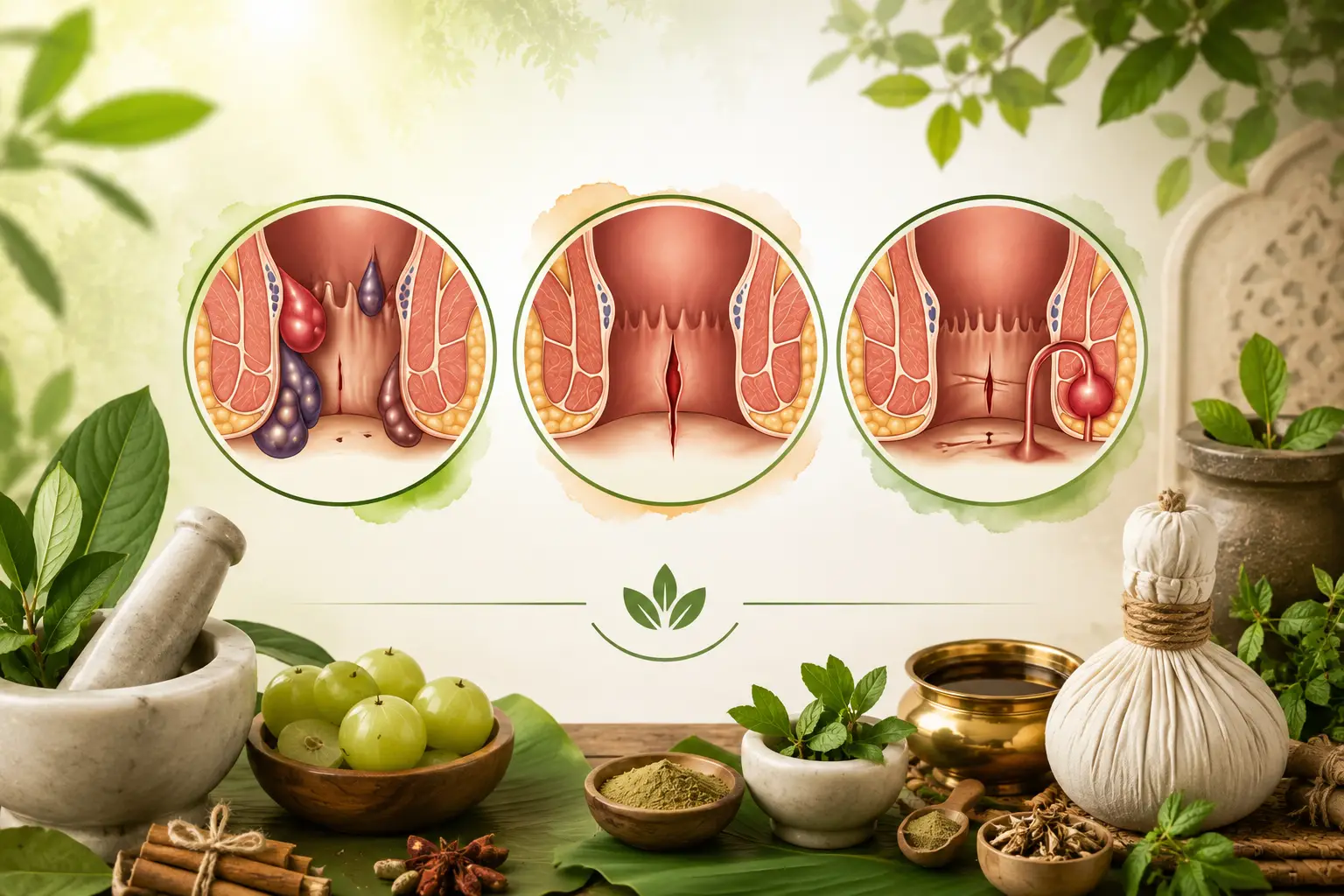
Piles vs Fissure vs Fistula: What Actually Differs
A clear guide to Piles vs Fissure vs Fistula symptoms, causes, treatment approaches, and when to seek medical care.
Pain, bleeding, or a lump near the anus sends most people straight to Google typing “piles,” but piles vs fissure vs fistula is a mix-up of three separate conditions that share overlapping symptoms and demand very different treatment. Confusing them is common, and it isn’t just semantics — treating a fistula like a pile, or a fissure like a pile, wastes weeks on the wrong remedy.
This article breaks down what separates them, how to spot which one you’re actually dealing with, and — since that’s the question we get asked most — which of the three ayurveda genuinely treats well.
Piles vs Fissure vs Fistula: The Quick Answer
- Piles (hemorrhoids, also called bawaseer) are swollen, engorged veins inside the anal canal or just under the skin around the anus. They form gradually from pressure, not infection.
- Anal fissure is a small tear in the lining of the anus, usually caused by passing a hard or large stool. Think of it as a paper cut in a very sensitive place.
- Anal fistula is an abnormal tunnel that forms between an infected gland inside the anus and an opening in the skin nearby, almost always following an anal abscess that didn’t fully heal.
The mechanism differs sharply: piles come from pressure and dilated blood vessels, fissures come from mechanical trauma, and fistulas come from infection. That distinction alone explains why the same home remedy rarely works for all three.
Piles vs Fissure vs Fistula: How the Symptoms Differ
| Symptom | Piles | Fissure | Fistula |
|---|---|---|---|
| Bleeding | Bright red, often painless | Bright red, appears with sharp pain | Sometimes present, often mixed with discharge |
| Pain pattern | Mild unless thrombosed; discomfort rather than sharp pain | Sharp, tearing pain during and for hours after a bowel movement | Persistent, throbbing; often worse when sitting |
| Discharge | Rarely | Rarely | Pus or foul-smelling fluid, a hallmark sign |
| Visible sign | Soft lump, may protrude with straining | Visible tear or skin tag at the anal opening | Small opening near the anus, sometimes with swelling |
| Fever or chills | Uncommon | Uncommon | Possible if infection is active |
If discharge and fever show up alongside the pain, that combination points toward a fistula specifically, and it warrants prompt medical attention rather than home management.
Piles vs Fissure vs Fistula: What Causes Each Condition
Piles develop from chronic straining, prolonged sitting, low-fiber diets, and pregnancy — anything that repeatedly raises pressure in the rectal veins. Fissures, by contrast, usually trace back to a single traumatic event: a hard stool tearing the anal lining, sometimes triggered by chronic constipation or childbirth. Fistulas start differently altogether — an anal gland gets blocked, becomes infected, forms an abscess, and if that abscess doesn’t drain and heal completely, it leaves behind a tunnel connecting the gland to the skin.
Because a fistula’s root cause is infection rather than pressure or trauma, treating it like a pile — with fiber and sitz baths alone — won’t close the tunnel. It needs a procedure to address the tract itself.
Piles vs Fissure vs Fistula: Which One Does Ayurveda Actually Treat Well?
This is where honesty matters more than optimism.
Piles respond genuinely well to Ayurvedic care, especially in earlier grades. Diet, herbal formulations, and lifestyle changes address the underlying pressure and constipation driving them. Our guide on ayurveda vs surgery for piles covers exactly which grades respond to conservative care and which need a procedure.
Fissures often heal with the same basics that help piles — a high-fiber diet, adequate hydration, and warm sitz baths to relax the anal sphincter and improve blood flow to the area. Most acute fissures close within a few weeks with consistent care. Chronic fissures that don’t heal, though, sometimes need a minor procedure, since a tear that keeps reopening with every bowel movement can outpace what diet alone can fix.
Fistulas are the outlier, and here’s the part most piles-focused content skips: Ayurveda doesn’t treat fistulas with oral herbs or diet. Instead, it uses Kshara Sutra — the same medicated-thread, para-surgical technique mentioned in our ayurvedic medicine for hemorrhoids guide — and this is actually its original and most classical use, described by the ancient surgeon Sushruta specifically for fistula-in-ano, long before it was adapted for piles. A clinician places the thread through the fistula tract, and it gradually cuts through and drains the infected passage while promoting healing. No amount of dietary change or oral herbal medicine resolves a fistula on its own, so anyone selling that idea is overselling it.
When to See a Doctor Immediately
Certain signs skip the wait-and-watch phase entirely:
- Pus or foul-smelling discharge near the anus — this almost always signals a fistula or active infection.
- Fever, chills, or spreading redness around the anal area — a sign of infection that needs urgent care.
- Pain that worsens over days rather than improving — piles and mild fissures typically ease with basic care; worsening pain suggests something else is happening.
- A lump that won’t reduce, or one that’s suddenly very painful and firm — this can indicate a thrombosed hemorrhoid or an abscess, both of which need same-day evaluation.
For general symptoms, Mayo Clinic’s overview of anal fissure is a useful independent reference alongside your doctor’s exam.
FAQ
Can a fissure turn into a fistula?
Not directly. A fissure is a tear; a fistula forms from an infected gland and abscess. They can, however, occur together, and a fissure that becomes infected can complicate diagnosis, which is exactly why a professional exam matters.
Is bawaseer the same as fistula?
No. Bawaseer is simply the Hindi term for piles (hemorrhoids), not fistula. The two are frequently searched together because of overlapping symptoms, but they’re different conditions requiring different treatment.
Can I treat a fistula with piles medicine?
No. Oral herbal piles formulations and diet changes address pressure-related swelling, not an infected tunnel. A fistula needs a procedure — Kshara Sutra or conventional surgery — to close the tract.
How do I know if my bleeding is from piles or a fissure?
Piles bleeding is usually painless; fissure bleeding comes with sharp, tearing pain during and after passing stool. That pain difference is one of the clearest self-checks, though a doctor’s exam confirms it either way.
Does Kshara Sutra work for both piles and fistula?
Yes, though it’s most classically and most successfully used for fistula-in-ano. For piles, it’s generally reserved for more advanced grades rather than a first-line treatment.
The Bottom Line
Piles, fissure, and fistula overlap in symptoms but not in cause, and that’s exactly why “piles vs fissure vs fistula” trips people up so often. Piles and mild fissures genuinely respond to Ayurvedic diet and herbal care. Fistulas don’t — they need a procedure, whether that’s Kshara Sutra or conventional surgery. Getting the diagnosis right first is what actually saves the weeks people otherwise lose treating the wrong condition.