

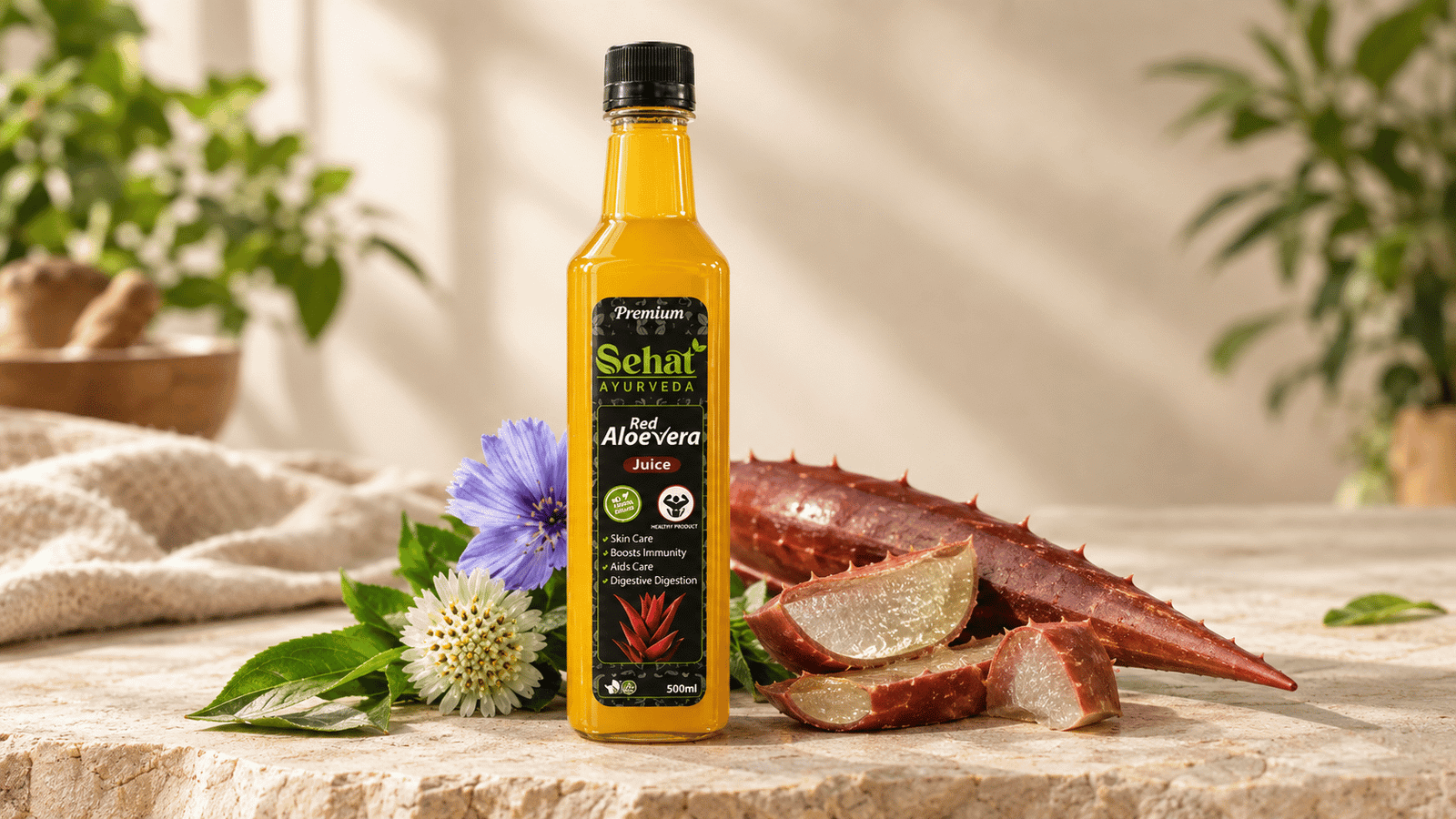
If you’ve come across “red aloe vera” while shopping for an aloe juice and wondered whether it’s just clever branding or something genuinely different, you’re asking the right question. Most of what shows up online for red aloe vera is a product listing or a bold marketing claim rarely an actual explanation.
This guide covers what red aloe vera actually is, how it compares to the regular green variety, what its benefits genuinely are, and where the claims around it get overstated. We’re not going to repeat the wilder claims some sellers make; a few of those go as far as “cures cancer,” which isn’t something any aloe product red or green has been shown to do.
This article is for general information and isn’t a substitute for medical advice. Check with a doctor before adding any new herbal juice to your routine, especially if you’re pregnant, on medication, or managing a health condition.
What Is Red Aloe Vera, Exactly?
Red aloe vera comes from Aloe cameronii (sometimes called Aloe cameroni), a variety native to southern Africa with reddish-brown leaves rather than the familiar green of Aloe barbadensis miller the species behind most standard aloe vera juice. It’s rarer and less widely cultivated, which is part of why it costs more and why fewer brands carry it.
Sellers commonly describe red aloe vera as significantly more potent than regular aloe vera figures like “22 times more powerful,” “double the amino acids,” or “triple the polysaccharides” show up across nearly every product page in this category. Worth knowing: these figures appear consistently in marketing copy but aren’t backed by independent, published research that we could verify. Treat them as claims repeated across the market rather than settled science, and know that red aloe vera hasn’t been studied nearly as extensively as standard aloe vera, which does have a larger body of research behind it.
Red Aloe Vera vs Regular Aloe Vera: What’s Actually Different
| Red Aloe Vera (Aloe cameronii) | Regular Aloe Vera (Aloe barbadensis) | |
|---|---|---|
| Origin | Southern Africa, rarer | Widely cultivated globally |
| Leaf color | Reddish-brown | Green |
| Availability | Limited, fewer brands | Common, most major brands |
| Taste | Reported as slightly less bitter | More bitter, commonly diluted |
| Research base | Limited independent studies | Larger body of published research |
| Traditional use | Digestion, skin, general wellness | Digestion, skin, general wellness |
The honest takeaway: both varieties are used for broadly similar purposes. Red aloe vera’s main differentiators are its rarity and reported taste, not a proven, independently verified potency advantage.
Red Aloe Vera Juice Benefits
Based on traditional use and the properties aloe vera (in both varieties) is generally recognized for, red aloe vera juice is commonly associated with:
- Digestive support — aloe vera juice is traditionally used to support regular digestion and ease occasional bloating, one of its most consistently cited uses.
- Antioxidant content — aloe contains polyphenols and other antioxidant compounds that contribute to general wellness support.
- Hydration and nutrient intake — aloe juice provides vitamins (including B, C, and E) and minerals as part of a daily routine.
- Skin support — when used topically, aloe gel is well known for soothing and moisturizing; the juice form is more commonly used for internal digestive support.
These reflect traditional and commonly cited uses of aloe vera. Individual results vary, and none of these should be read as a claim to treat, cure, or prevent any medical condition.
Can Red Aloe Vera Juice Help with Digestive Issues Like Piles?
This connects to something we’ve covered before, so it’s worth addressing directly. Aloe vera juice’s traditional reputation for supporting digestion and easing constipation means it sometimes comes up in the context of piles and there is a genuine logical link, just not a direct one.
Piles are closely tied to straining from irregular, hard-to-pass bowel movements, something we broke down in detail in how to maintain regular bowel movements. To the extent that aloe vera juice supports smoother digestion, it can fit into that broader picture but it isn’t a targeted piles treatment, and it isn’t a substitute for addressing piles directly. If you’re already dealing with piles symptoms, our guides on piles and bleeding and herbal piles capsules cover formulations built specifically for that purpose.
How to Use Red Aloe Vera Juice
Most red aloe vera juice is taken diluted commonly around 20-30ml mixed with water, once or twice daily, ideally on an empty stomach in the morning. That said, follow the specific directions on your product’s label rather than a generic figure, since concentration varies by brand and formulation.
Start with a smaller amount if you’re new to aloe juice, since some people notice mild digestive adjustment in the first few days.
Who Should Be Cautious
Aloe vera juice isn’t automatically risk-free for everyone. Check with a doctor first if you’re pregnant or breastfeeding, managing diabetes or a chronic digestive condition, or currently on prescription medication, since aloe can interact with certain drugs. Anyone with a known allergy to plants in the lily family should also be cautious.
Frequently Asked Questions
Is red aloe vera actually different from regular aloe vera?
Yes, botanically it comes from a different species (Aloe cameronii vs. Aloe barbadensis). The dramatic potency claims common in marketing aren’t independently verified, but the plants themselves are genuinely distinct varieties.
Is red aloe vera juice safe to drink daily?
Many people use it daily as part of a routine, generally in small diluted amounts. That said, check with a doctor before daily use if you’re pregnant, on medication, or managing a health condition.
Does red aloe vera juice help with digestion?
Aloe vera juice, red or green, is traditionally used to support digestion and ease occasional bloating. It’s a general digestive support, not a treatment for a specific digestive condition.
What are the benefits of red aloe vera juice for skin?
Aloe’s skin benefits are most established in topical use (gel applied directly to skin) rather than the juice form. The juice is more commonly used for internal digestive and general wellness support.
How is red aloe vera juice different from Patanjali or Dabur aloe vera juice?
The main difference is the aloe species used red aloe vera comes from Aloe cameronii, while most major-brand aloe juices use standard Aloe barbadensis (green aloe vera). Both are used for similar general wellness purposes.
The Bottom Line
Red aloe vera is a genuinely distinct, rarer variety of aloe that part is real. The extraordinary potency multipliers attached to it in most marketing, though, aren’t independently verified, and it’s worth choosing it for what’s actually known (a different plant, a reportedly milder taste, traditional digestive and wellness support) rather than for claims that outpace the evidence.